
The Breakdown
Mottley’s popularity did not emerge from charisma alone. It grew out of her ability to navigate a difficult economic and political landscape.
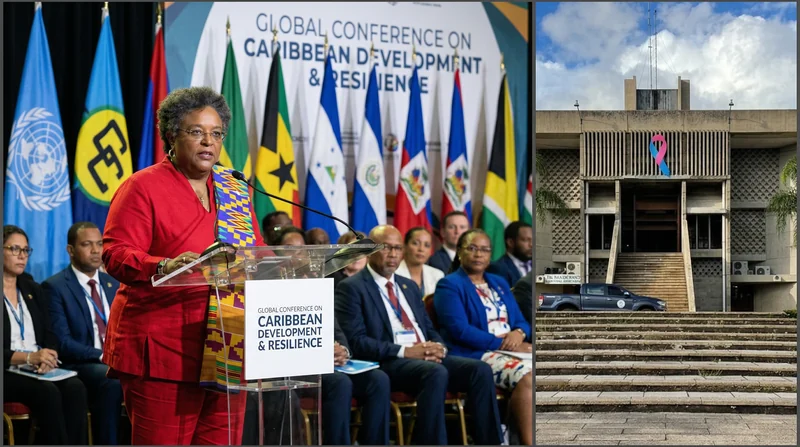
Explore sectionMia Mottley’s clean sweep victory in Barbados has reignited calls for a female Prime Minister in Belize. But her popularity is rooted less in symbolism and more in disciplined leadership under economic pressure. Before Belize turns admiration into prescription, it must confront the structural realities any leader would face.
Based on the published essay, last edited March 1, 2026. Cards show excerpts. Open a section for the complete passage and its qualifications.
Sections follow the essay’s order. Open a card to read its context.
5 sections
Mottley’s popularity did not emerge from charisma alone. It grew out of her ability to navigate a difficult economic and political landscape.
Explore sectionStill, dismissing the gender conversation outright would be intellectually lazy.
Explore sectionAny Belizean leader, male or female, would confront difficult reforms: debt management, public sector restructuring, crime policy reform, tourism diversification, and climate finance negotiations.
Explore sectionPerhaps the more productive national conversation is not whether Belize needs a female leader, but whether Belize understands the institutional constraints any leader must navigate.
Explore sectionCelebrating regional success is healthy. Caribbean solidarity matters. Admiring competence beyond our borders can be constructive.
Explore sectionTry a different term.
Open one part, move through the essay or expand every section.
Belizeans recently celebrated a clean sweep in Barbados. Many are praising Mia Mottley and saying, almost instinctively, that Belize now needs a female leader.
That reaction is understandable.
But before we turn admiration into prescription, it is worth asking a harder question: do we truly understand why she is popular, or are we projecting our own frustrations onto a symbol?
Leadership is not simply about gender. It operates within systems, and small countries feel systemic pressure more intensely than most.
Mottley’s popularity did not emerge from charisma alone. It grew out of her ability to navigate a difficult economic and political landscape.
Barbados faced high public debt that at one point exceeded 150 percent of Gross Domestic Product, International Monetary Fund scrutiny under a formal stabilization programme, post-pandemic tourism collapse, climate vulnerability, and rising cost of living pressures.
None of those problems lend themselves to dramatic gestures or viral sound bites. They require discipline, negotiation, and restraint.
Debt restructuring is not glamorous. International negotiations are rarely visible to the public. Managing tourism recovery while maintaining fiscal credibility demands constant calibration. In that environment, one miscalculation can trigger market reactions, domestic backlash, or external pressure.
Her leadership, therefore, has been a balancing act between global finance and local voters, climate advocacy and economic survival, reform and political backlash. That balancing act is central to her appeal. Not because she is a woman, but because she has demonstrated competence under pressure.
When we bring that reflection home to Belize, the structural similarities are difficult to ignore. Belize itself underwent a major debt restructuring in 2021 and continues to manage external debt obligations, while remaining heavily dependent on tourism earnings and vulnerable to climate shocks.
Belize remains a small, open economy heavily dependent on tourism. Public debt remains a sensitive issue. Crime, governance fatigue, and institutional trust deficits continue to challenge policymakers.
If Belize were to elect a female Prime Minister tomorrow, those structural pressures would not disappear. Debt would still require discipline. Crime would still require sustained reform. Bureaucracy would still demand modernization. The tightrope does not disappear simply because the person walking it changes.
Still, dismissing the gender conversation outright would be intellectually lazy.
Representation matters. Belize has never had a female Prime Minister. A breakthrough of that nature can shift morale, inspire young women, and recalibrate public expectations about who belongs in positions of authority. Symbols shape imagination, and imagination influences ambition.
Mottley’s appeal is not purely technical. She combines policy competence with narrative strength. She speaks with intellectual authority and Caribbean confidence. She frames Barbados as small yet sovereign, vulnerable yet assertive. That symbolism enhances her leadership rather than replacing substance.
Gender can shape lived experience. It can influence perspective and leadership style. Many argue that women leaders often adopt more collaborative approaches or face higher scrutiny that compels discipline. These are debates worth having.
However, symbolism without structural reform eventually collides with reality.
Inspiration must be matched with execution.
Visibility must be paired with policy depth.
Mottley’s sustained popularity appears to rest not only on representation, but on her ability to convert symbolism into measurable governance outcomes.
Any Belizean leader, male or female, would confront difficult reforms: debt management, public sector restructuring, crime policy reform, tourism diversification, and climate finance negotiations.
Each initiative would generate resistance.
Reform disturbs comfort.
Institutional change creates friction.
The louder the reform, the stronger the backlash.
Leadership in such a context is not about dramatic leaps. It is about incremental movement without triggering systemic instability. The public demands bold change. The economy demands caution. International partners demand credibility. Voters demand relief.
Reconciling those competing pressures is the essence of political leadership in small states.
Across the Caribbean, leaders must constantly balance domestic expectations with international financial credibility.
Barbados, Jamaica, and Belize have all experienced versions of this fiscal tightrope in recent decades.
Perhaps the more productive national conversation is not whether Belize needs a female leader, but whether Belize understands the institutional constraints any leader must navigate.
Belize’s challenges are not rooted in a gender deficit. They are rooted in institutional friction, slow execution, inconsistent policy direction, and eroding public trust.
Changing the face at the top without addressing those structural realities risks disappointment. History offers numerous examples, across genders and regions, where expectations outpaced institutional reform.
Celebrating regional success is healthy. Caribbean solidarity matters. Admiring competence beyond our borders can be constructive.
But admiration should lead to analysis, not assumption.
If Belize is to have a serious conversation about leadership, the focus should include clear policy priorities, tolerance for reform-related discomfort, and a willingness to strengthen institutions rather than personalize hope.
A female leader could carry significant symbolic weight in Belize. That symbolism could energize segments of society and reshape expectations. The decisive question is whether such symbolism would be accompanied by disciplined, system-aware governance.
Inspiration may ignite a moment.
Competence sustains a mandate.
Institutions sustain a nation.
Thinking out loud.
Links from the essay and, where available, its original interactive edition. Their labels show where they came from. Read the original context before drawing conclusions.
This essay contains no external source links. This guide adds none.
Read the full essay →